
Lee Richardson
Another School
13 Feb — 29 Mar
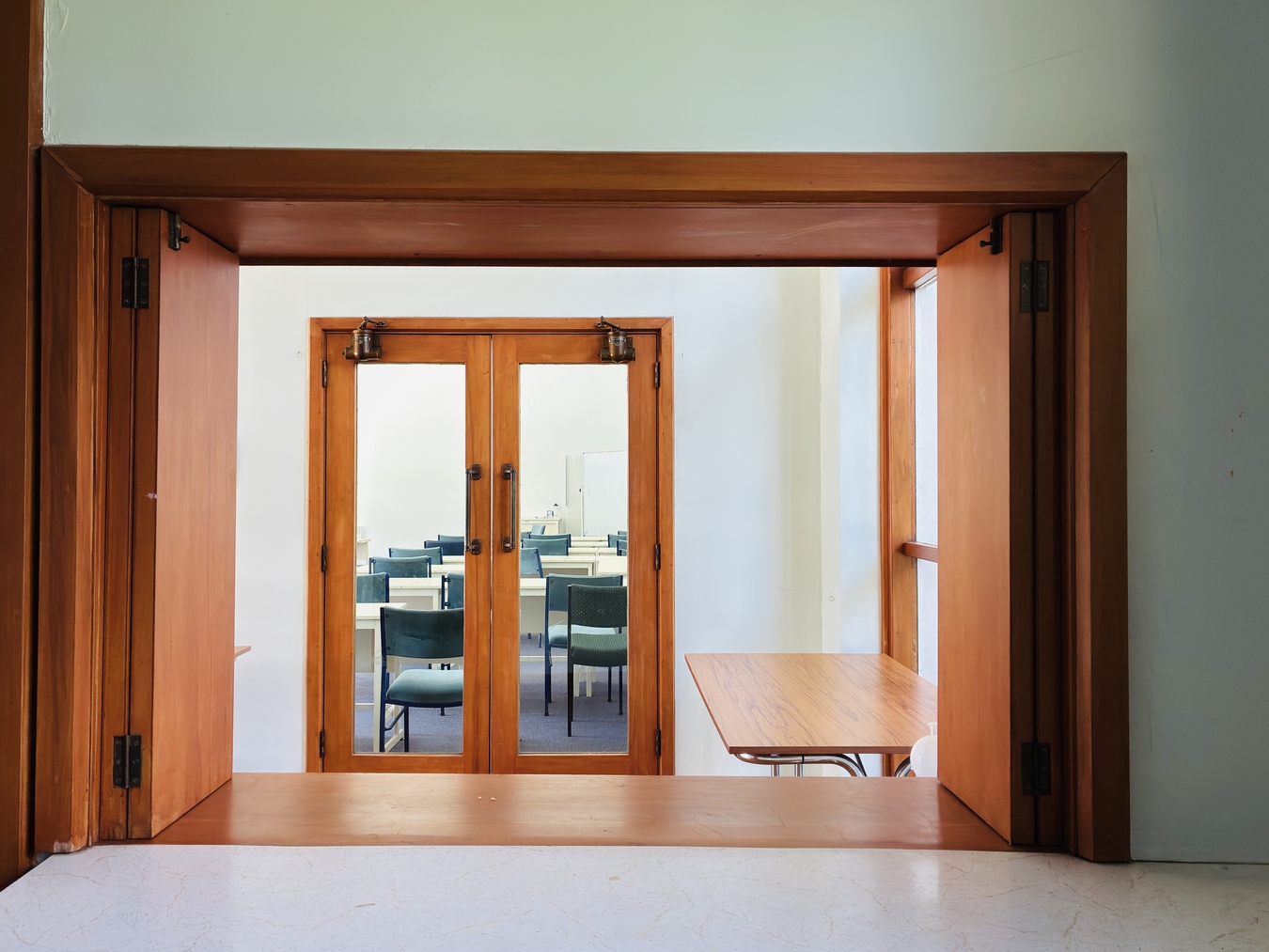
Lee Richardson, view from kitchenette of Young Farmers' Club Memorial Hall (now functions as a classroom), working image for Another School.
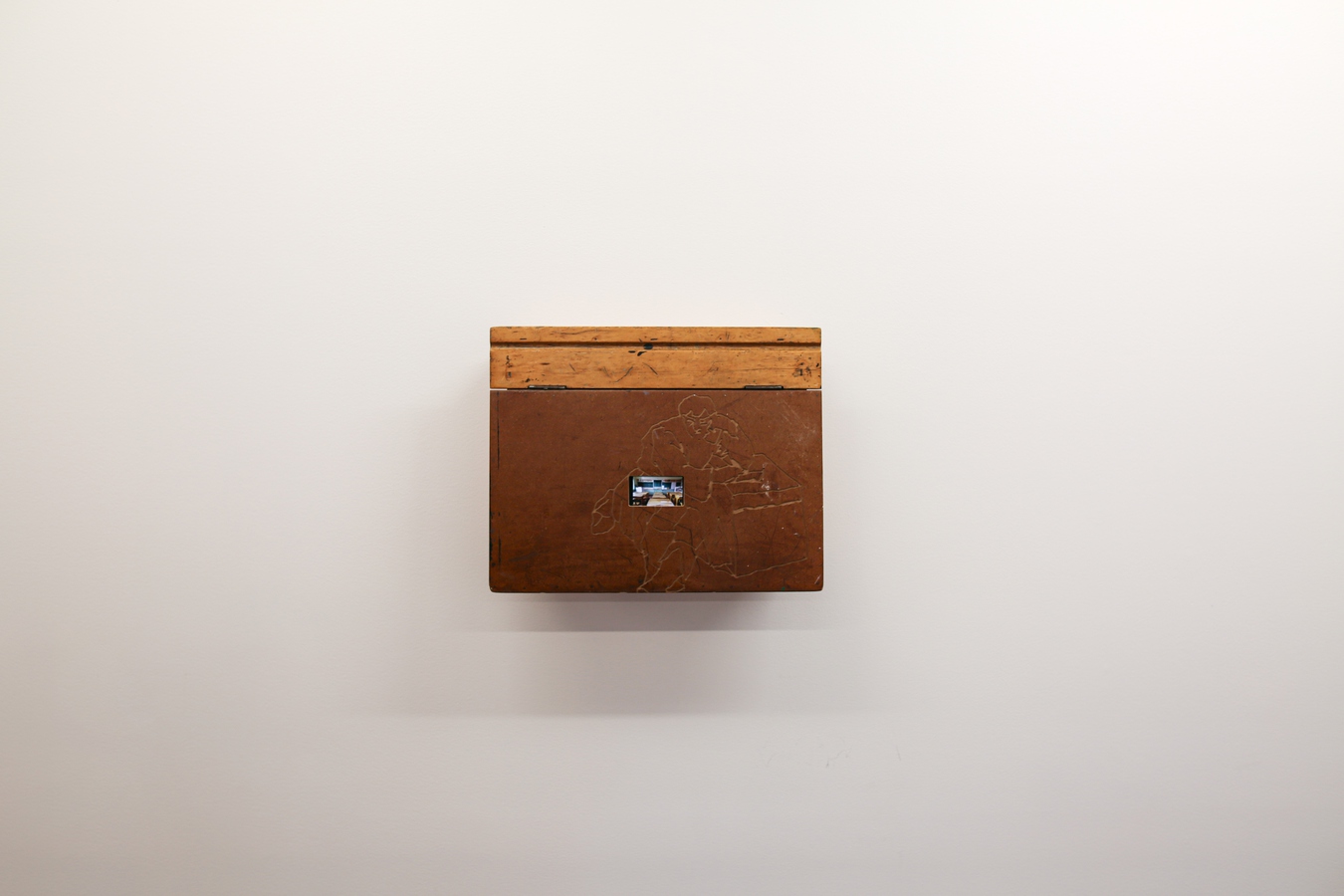
Tom Collins, CNC-routed desk from Desktop Screensaver, Beanbag Screensaver event with Carl Lindström, as part of Another School, 2026
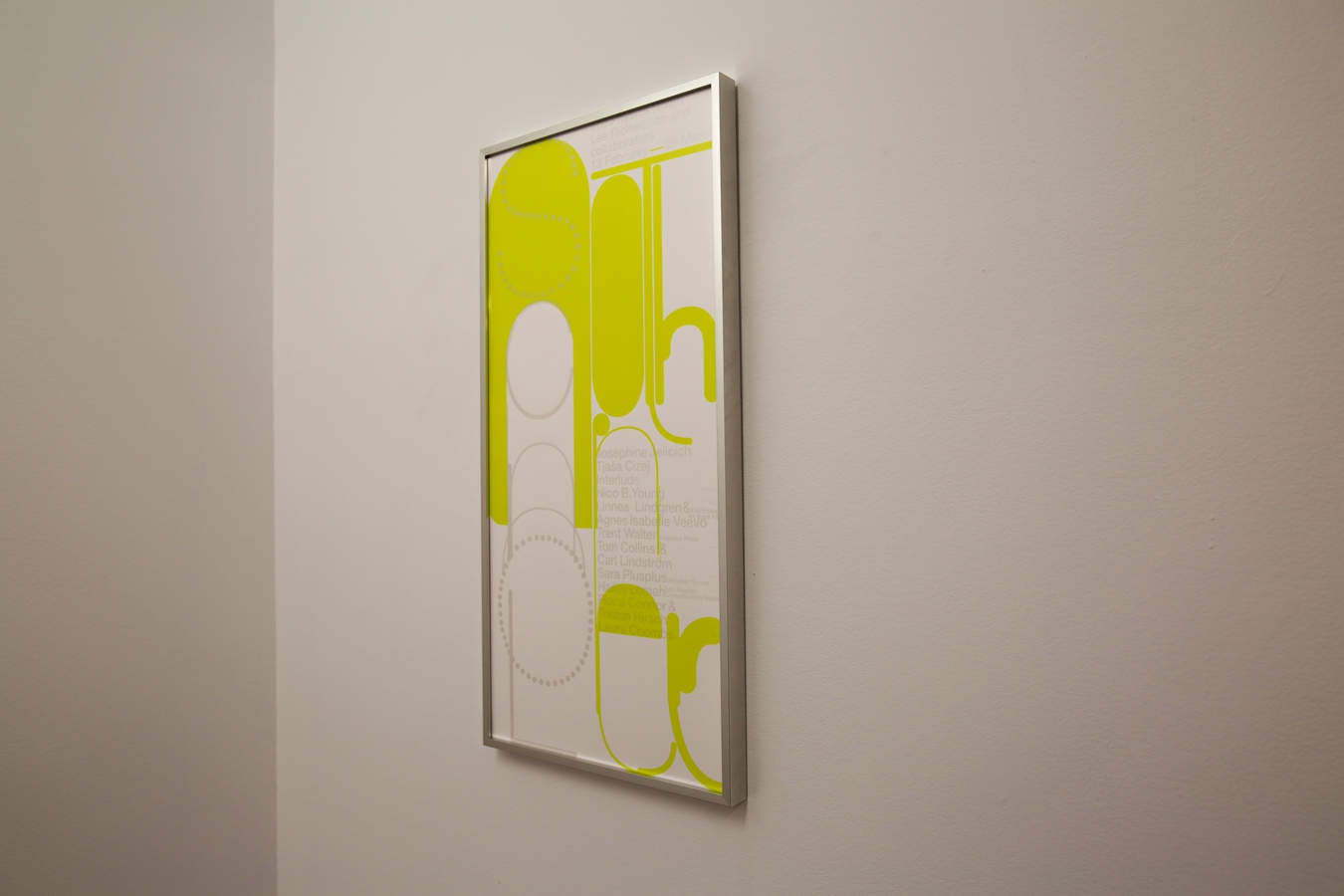
Lee Richardson and Tjaša Cizej, Another School (install detail) screenprinted poster, 2026
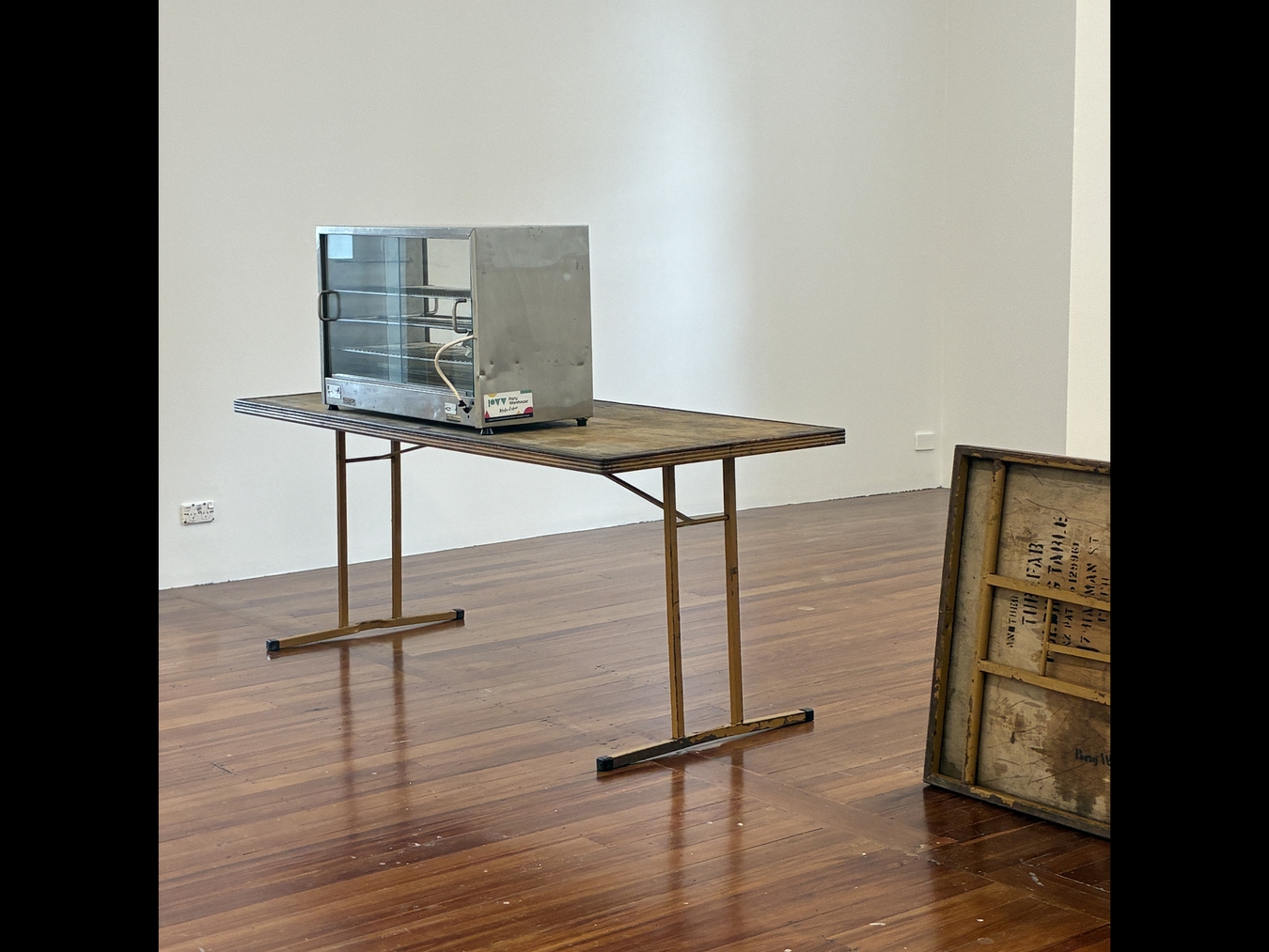
Lee Richardson, Another School (install detail), folding trestle table, piewarmer, 2026
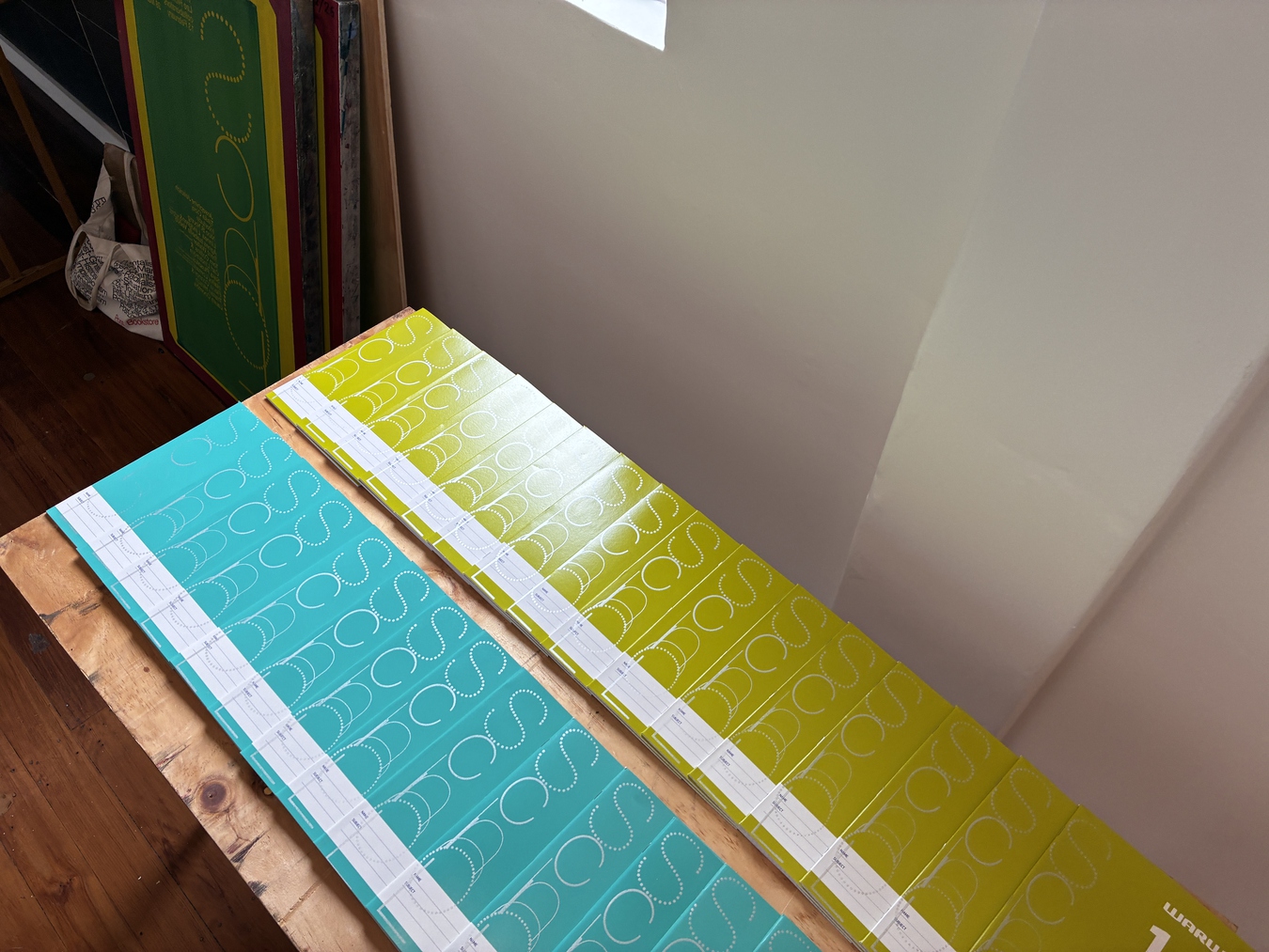
Lee Richardson, Another School (install detail), screenprinted Warwick exercise books, 2026
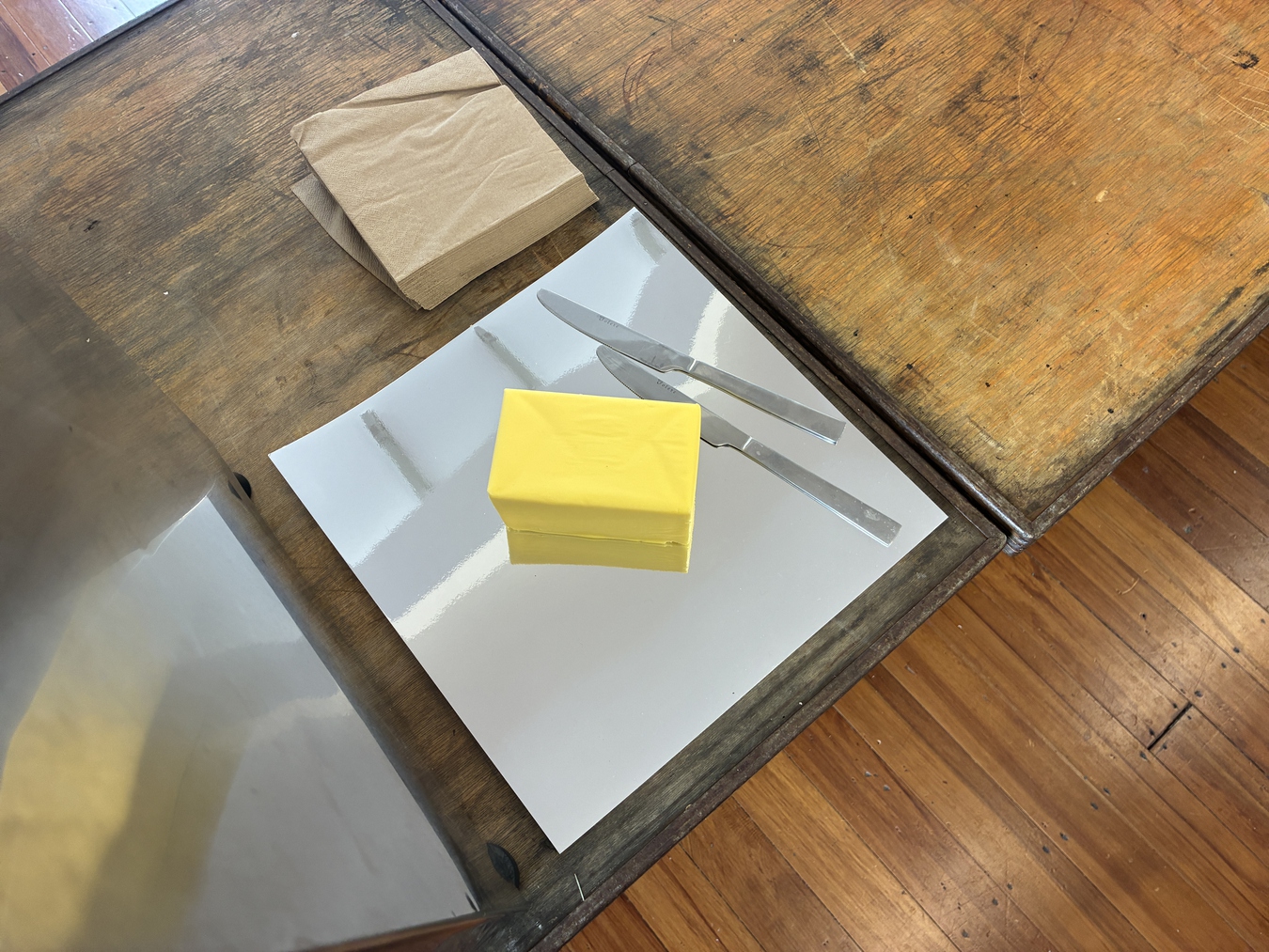
Lee Richardson, Another School (install detail), butter, napkins, 2026
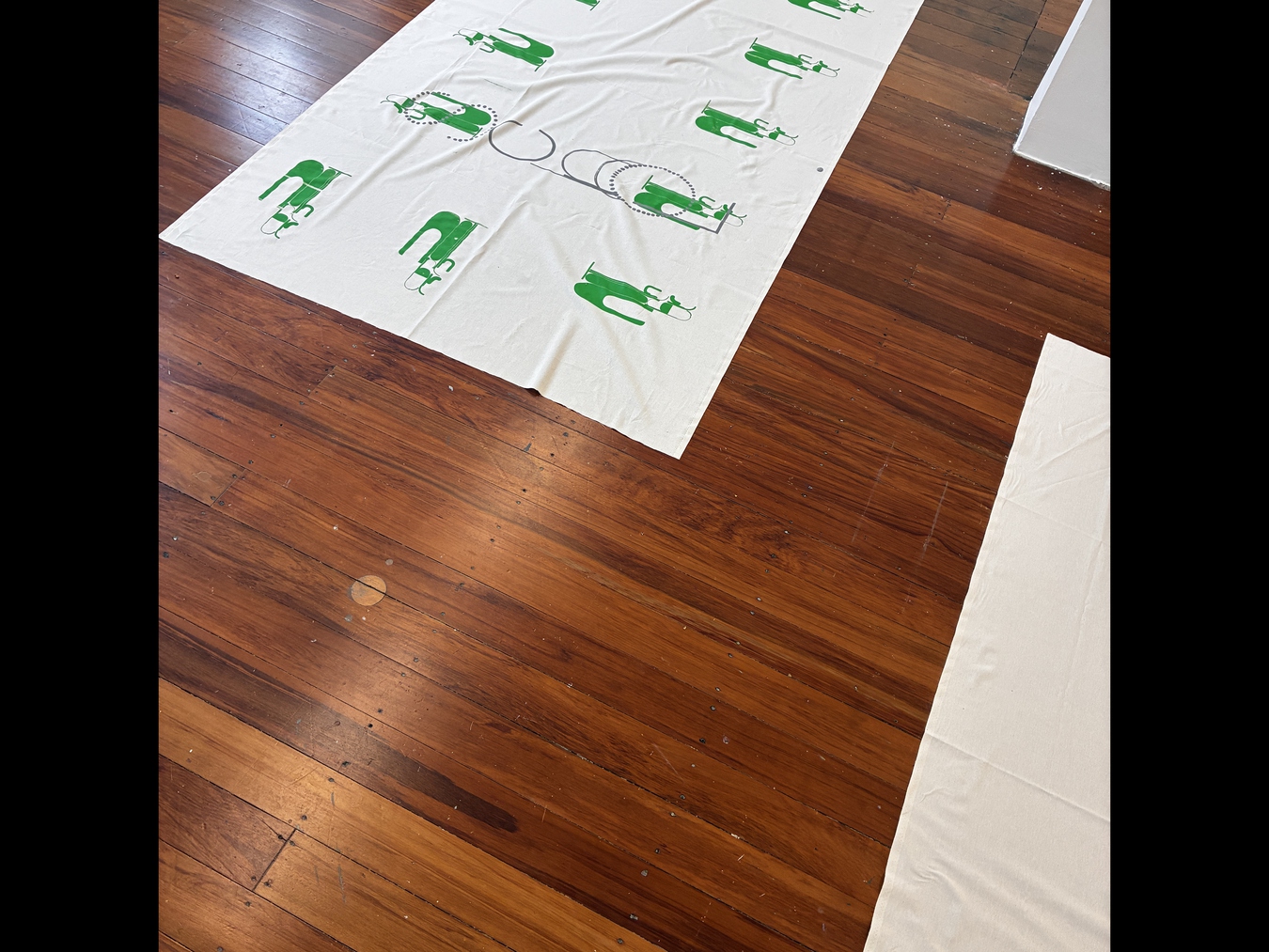
Lee Richardson, Another School (install detail), screenprinted tablecloth, 2026
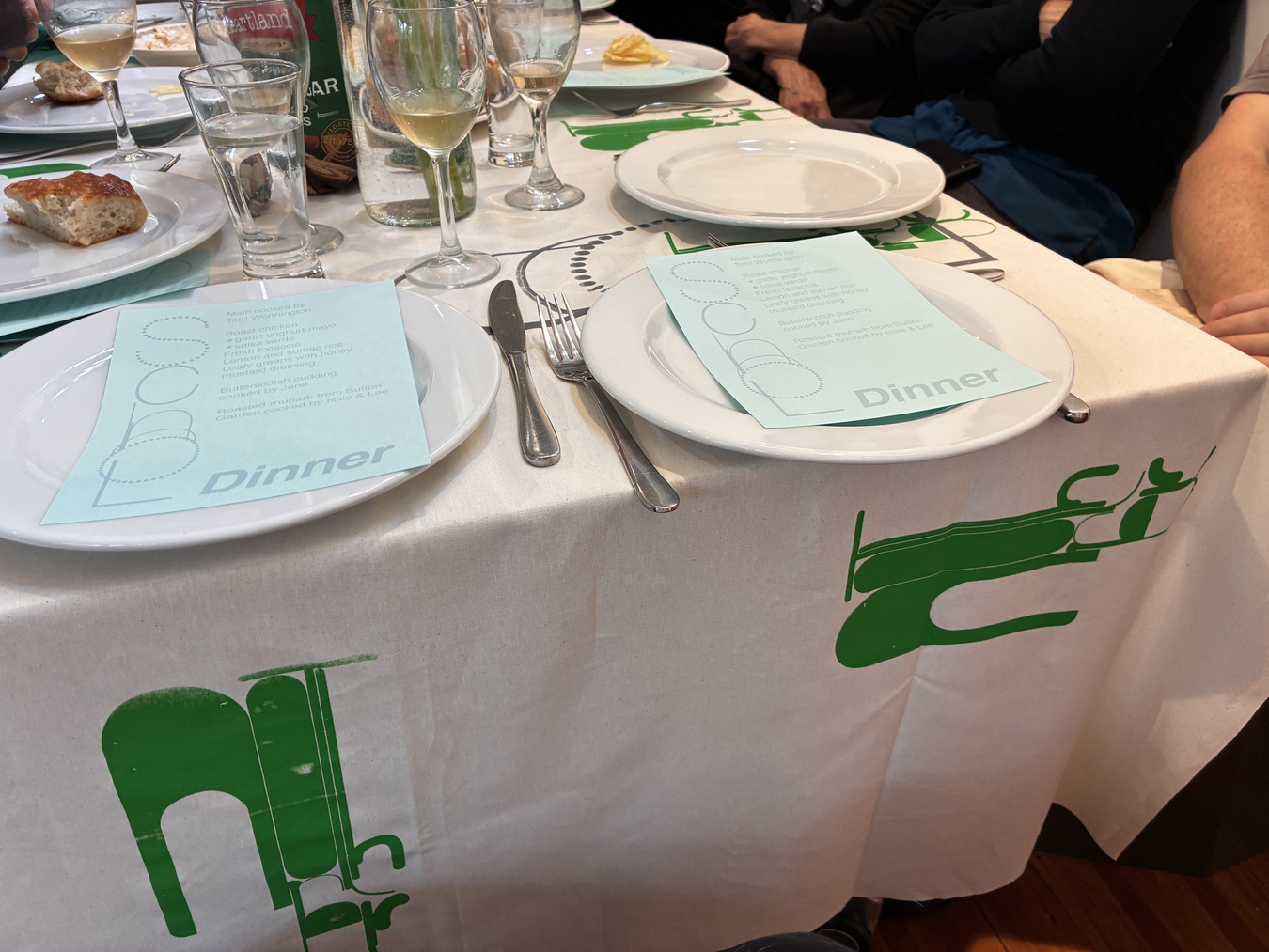
Lee Richardson, Another Dinner event, 2026
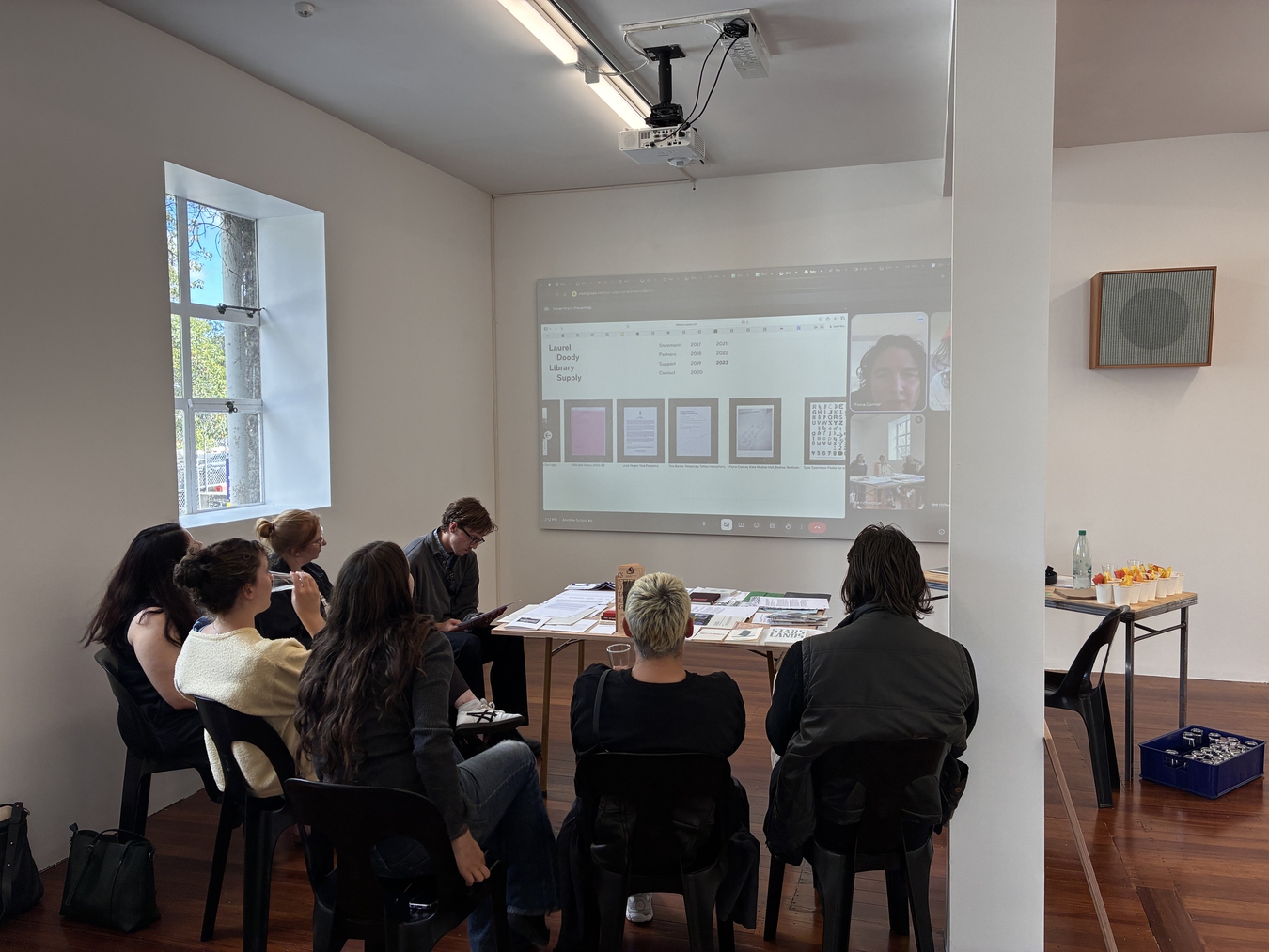
Fiona Connor and Tristan Hirsch, Laurel Doody Library Supply event, as part of Another School, 2026
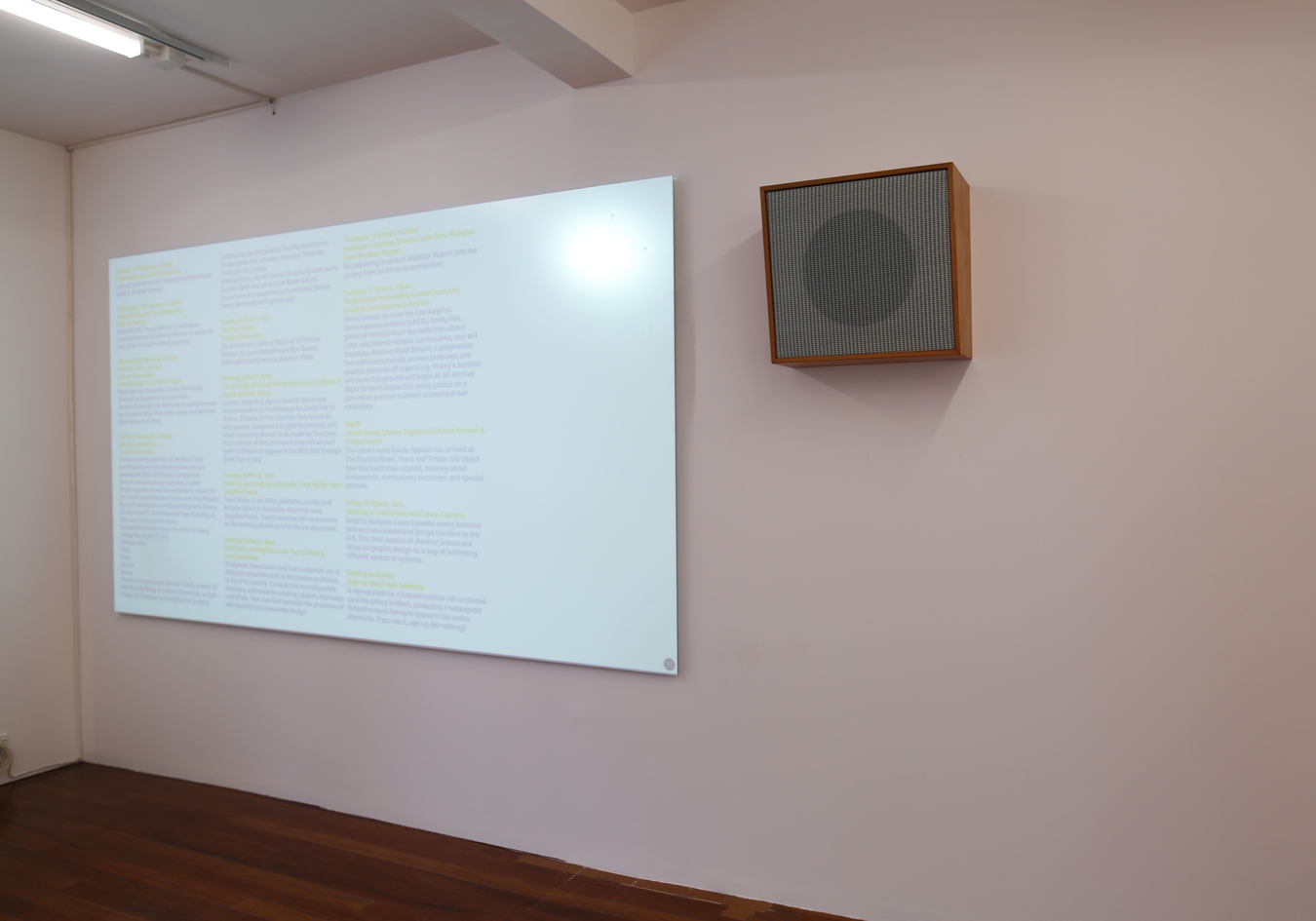
Lee Richardson and Josephine Jelicich, Another School (install detail), rimu intercom speaker and screen, 2026.
Lee Richardson
Another School, with collaborators
13 February – 29 March 2026
Mihi whakatau and opening celebration: 5.30pm, 12 February 2026
Another School follows the structure of a six week school programme. The gallery space will be used as a classroom as well as a testing ground and working studio, referencing models of alternative art and design education.
Objects and lecture sessions have been developed in collaboration with:
Josephine Jelicich
Tjaša Cizej
Interlude
Nico B. Young
Linnea Lindgren & Agnes Isabelle Veevo (Fair Enough Art Book Fair)
Trent Walter (Negative Press)
Tom Collins & Carl Lindström
Hailey Loman (Los Angeles Contemporary Archive)
Fiona Connor & Tristan Hirsch
Laura Coombs
*****
Another School is an exhibition developed by Lee Richardson and collaborators. The exhibition period follows the structure of a six week school programme. During this time, the gallery space will be used as a classroom as well as a testing ground and working studio, referencing models of alternative art and design education. Lecture sessions and hands-on events have been scheduled throughout the exhibition with artists, designers and architects outside of Aotearoa, opening up conversations about design, publishing, and education between like-minded practitioners in different places.
The use of the word ‘another’ in the project’s title makes reference to the steel-framed, wood-topped trestle tables manufactured at Tubefab in Ōtautahi, beginning in the 1960s. When production ramped up in later decades, the company introduced stamping the underside with the block text ‘Another Folding Table.’ They were commonplace in schools, but also in town halls, churches and other communal municipal venues. Such tables can still be found in commission; Risingholme Learning for example, continues to use these trestles to accommodate its classes.
Concepts of school, education, and the scholastic visual language are central to Lee’s practice. His research into the trestle tables began while on residence at Lincoln University where he had access to a disused lot of them, removed from classrooms and stored outside in stacks. They became important as a tool for daily rearrangement, thinking about the ideal way to bring a group of people together in testing and learning, and the role this standard furniture had in encouraging a certain kind of education. The mass local manufacture of these tables, now bygone, also prompted a meditation on the connection between changing community conditions and the fragmentation of local industry.
The ‘another’ of Another School also places the project into a lineage of other models for alternative art and graphic design education. In 2014, graphic designer and Ilam School of Fine Arts lecturer Luke Wood ran (Graphic) Design School School at The Physics Room, in conjunction with visiting artist and academic colleague Brad Haylock. (Graphic) Design School School relocated Luke and his students into the gallery for one school term to work towards a new and improved design curriculum, and beyond this, to reflect on how these alternative modes of education could be practically implemented within the tertiary environment. As a student of Luke (though not involved directly with (Graphic) Design School School), this programme served as a precedent for Lee’s Another School, as have two further Physics Room projects: the Reading Walking Writing workshop convened by Melanie Oliver and Abby Cunnane at Cass, the storied locality in inland Waitaha, in 2015, and S/F Project in 2013, which speculated on modes of collaboration and collectivity that might be transitional, temporary or opportunistic. Outside of The Physics Room, Escola para Nada (Provisional School for Nothing) in Portugal, and the Mountain School of Arts and Southland Institute, both in Los Angeles, have been important to developing Another School, in the ways they emphasise imagination, sitelessness, and non-monetary exchange as fundamental to producing ideas that resist institutional structures.
While Another School is mostly activated by its programme, the fixtures in the gallery build towards a version of school history marked by bookbags, canteen lunches, Warwick exercise books, sports days and pet days. It is this material that is of interest to Lee; he is working with the idea that the shell of past and often inadequate education standards could be retrofitted towards something better, more collaborative and non-hierarchical, than its origin. The wall-mounted rimu speaker, made by Josephine Jelicich and designed by Lee and Josephine, comes from a memory of the intercom system at Lee’s primary school. It reads clearly as an obsolete technology now, but it was already outmoded then and remained as residual matter in the classrooms. The constant updates to curriculums and the changing needs of schools in response meant there was frequently such a slippage between the time that a classroom’s design gestured to and the time period in which it actually existed.
This temporal lag serves the function of Another School as unmoored from official education requirements, and also fixed timezones. Many collaborators will be calling in from outside of Aotearoa. The always-connection between this local–Ōtautahi–and other locals–Naarm, Tallinn, Los Angeles, among other places–foregrounded in the way Lee works mirrors the mobility of the design and print distribution channels that these practitioners are also engaged with.
‘Another’ also indicates the fundamentally iterative process of Lee’s practice. This concept is intrinsically linked to the ongoing significance of screenprinting in his work, a medium that generates multiples, often with slight variations. Another School constitutes the first classroom test for Lee. The front space of the gallery will remain set up as a print studio until the exhibition’s close. Each week, the metal frame Lee has installed in the gallery will be swapped out with an overprinted poster detailing the upcoming sessions. At the end of the exhibition, the final poster will be layered as a document of Another School’s complete activity. In this way, both parts of Another School will be active for the full six weeks, accumulating as it continues.
*****
Lee Richardson is an artist and designer currently working between Ōtautahi and Tāmaki Makaurau. Lee co-founded Hot Lunch, an artist-run initiative on High Street (2020-21, Ōtautahi) and subsequently published Leftovers cataloguing the year of practice at this space. He runs the annual A Dinner for Scott event in Murihiku, bringing together artists, chefs and local students to present a multi-course dining experience. He was the inaugural Sculptor in Residence at Te Whare Wānaka o Aoraki Lincoln University (2025-26).