
Hendrix Hennessy-Ropiha, Keita Newbery, Ben Girven, Abigail Hau, Tiana Krafft-Soffe, Vanessa Green, Renati Waaka, Jazmin Tainui Mihi
Māori Camera Club
17 Oct — 04 Dec
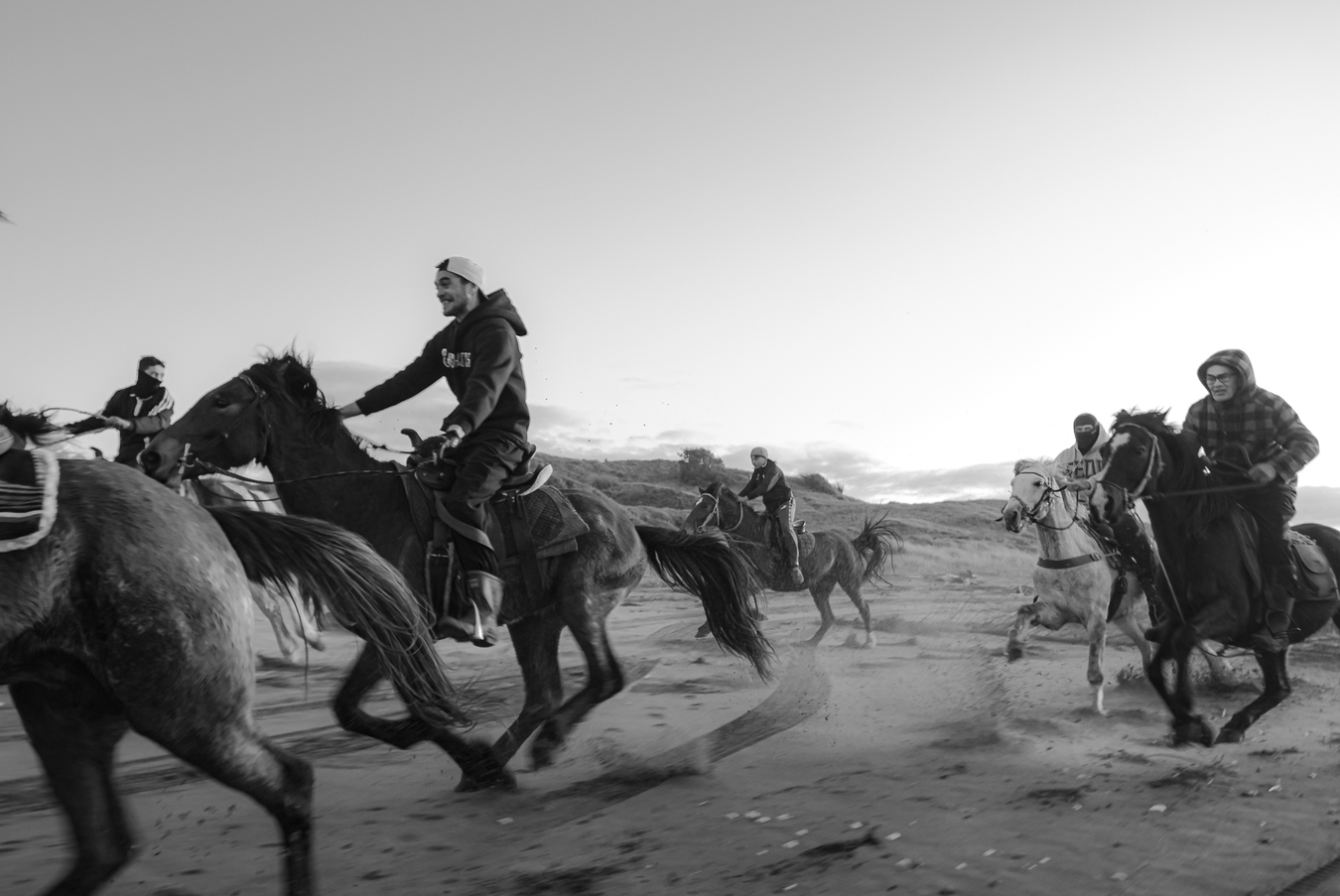
Jazmin Tainui Mihi. Taniwha Chasers, 2024. Image courtesy of the artist.
Māori Camera Club
17 October – 4 December
*Please note there is no opening for this exhibition. An artist floor talk will be held on Saturday 31 October at 1 pm.
Māori Camera Club is the inaugural exhibition for the members Hendrix Hennessy-Ropiha, Keita Newbery, Ben Girven, Abigail Hau, Tiana Krafft-Soffe, Vanessa Green, Renati Waaka, and Jazmin Tainui Mihi. The group exhibition presents a selection of new and existing lens-based works. The club was founded by members Bridget Reweti and Conor Clarke and the exhibition was curated by James Tapsell-Kururangi.
Ngā mihi nui ki exhibition partners The Chartwell Trust and National Services Te Paerangi for your generous support for the exhibition.
To coincide with the exhibition, Māori Camera Club will be running their second wānanga in Ōtautahi. They would like to thank all who supported their mahi through the Boosted campaign and key funders Toi Ōtautahi and National Services Te Paerangi.
Hendrix Hennessy-Ropiha (Ngāti Kahungunu, Ngāti Raukawa) is a Wellington-based artist working with photography. His practice often revolves around social and political currents within Aotearoa and how art can examine these in different ways. Recent exhibitions include 1840 at McLeavey Gallery (2026), Pahemata in the Courtenay Place Lightboxes (2026) and We can travel only a short way together in Levin (2025).
Keita Newbery (Ngāi Tūhoe, Ngāti Porou) is an Ōhinehou-based photographer working with black and white analogue photography. Her mahi focuses on our natural taonga resources, as well as the moments when the marae is still, the ‘in-between times’ so to speak. While the roles and responsibilities of tiaki taiao and manaakitanga are never laid to rest, her work speaks to the importance of tāoki.
Ben Girven (Ngāti Kahungunu ki Wairoa) is a contemporary art photographer, engaging the camera-less medium of the photogram. His whakaahua take form on location, with a pulse of light, in whenua, ngahere, awa and moana, embodying maramataka as methodology. Girven extends perceptions of wā , light and energy, exploring relational spaces activated in wānanga, through connection with art, and each other. Te taiao is creator, camera, and darkroom, blurring the distinction between the agents of photographic engagement and affirming whakaahua to be an Indigenous medium. He received a Bachelor of Design in Mātauranga Toi Māori and Photography, and a Master of Fine Arts at Te Kunenga ki Pūrehuroa, Massey University.
Abigail Hau (Ngātiwai, Ngāpuhi) is an analogue photographer born and based in Ōtautahi. Their photography is rooted in connection to taiao, to people, and to the quiet moments that often go unseen. Shot exclusively on film, their practice is slow and embodied as a way of honouring whakapapa and their lived connection.
Tiana Krafft-Soffe (Hihifo, Te Ātiawa, Ngāti Apa, Ngāti Kuia) is a multi-disciplinary artist, weaving together movement, lens, sound, and digital processes. Her practice centres movement of the body as an intuitive and genealogical pathway to knowledge. Incorporating visual and sonic artforms, Tiana shares her understanding of the being as multi-dimensional, to ignite a deepened bodily awareness. Tiana has trained in contemporary dance and ballet, and has completed a Bachelor of Design majoring in Mātauranga Toi Māori and Photography. She is currently working towards completing a Master of Fine Arts at Te Kunenga ki Pūrehuroa, Massey University.
Vanessa Green (Ngāti Maniapoto) is a photographer based in Tāmaki Makaurau. Her work moves between environmental portraiture, social documentary and the everyday moments in between. She often photographs people in their homes, neighbourhoods and other familiar surroundings. Vanessa works in a gentle and observational way, making photographs that feel honest and intimate. As a wahine Māori, she is interested in the relationships between people, whenua and community, and in how memory, belonging and a sense of home are carried through place.
Renati Waaka is a photographer of Te Arawa, Tainui, and Te Aupōuri descent, based in Te Whanganui-a-Tara, Aotearoa. His practice examines photography’s role in the colonial construction of queer Indigenous identity in Aotearoa. Waaka uses photography to intervene in this legacy by producing images grounded in Māori perspectives, asserting authorship and tino rangatiratanga.
Jazmin Tainui Mihi (Te Whānau-ā-Apanui, Ngāpuhi, Ngāti Hine, Whakatōhea) is a Māori multi-media creative and visual storyteller. Their mahi toi centres the celebration of Māori and Indigenous culture by fostering mana motuhake and reclaiming of visual narratives utilising the lens to better her community.